EazyGoz is a mobile courier platform that creates irrefutable custody trails when transferring anything valuable between individuals.
I designed the mobile experience to translate institutional-grade custody protocols into intuitive interfaces that make rigorous verification feel effortless.
FOUNDING STORY
Physical handoffs have no accountability infrastructure. When you need to courier something valuable, you're forced to either trust strangers or pay premium rates for enterprise logistics, and even then, disputes still happen.
EazyGoz closes this 'trust gap' by creating a verified custody infrastructure through a vetted courier marketplace. Every custody transfer is documented, verified, and irrefutable.
THE CHALLENGE
each custody transfer needed to feel significant without creating friction. Verification had to feel like meaningful progress toward delivery.
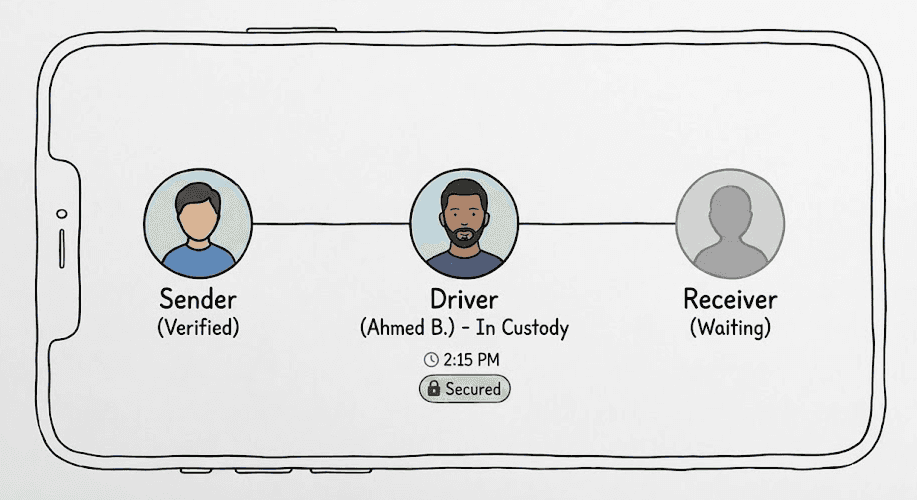
Traditional delivery apps use a simple "delivered" button. For EazyGoz, I needed to design three distinct verification moments:
Sender → Driver (Pickup Verification)
Driver → Recipient (Delivery Verification)
Continuous custody awareness (Who has it right now?)
Each moment required a different interaction pattern based on context and security needs.
PICKUP VERIFICATION
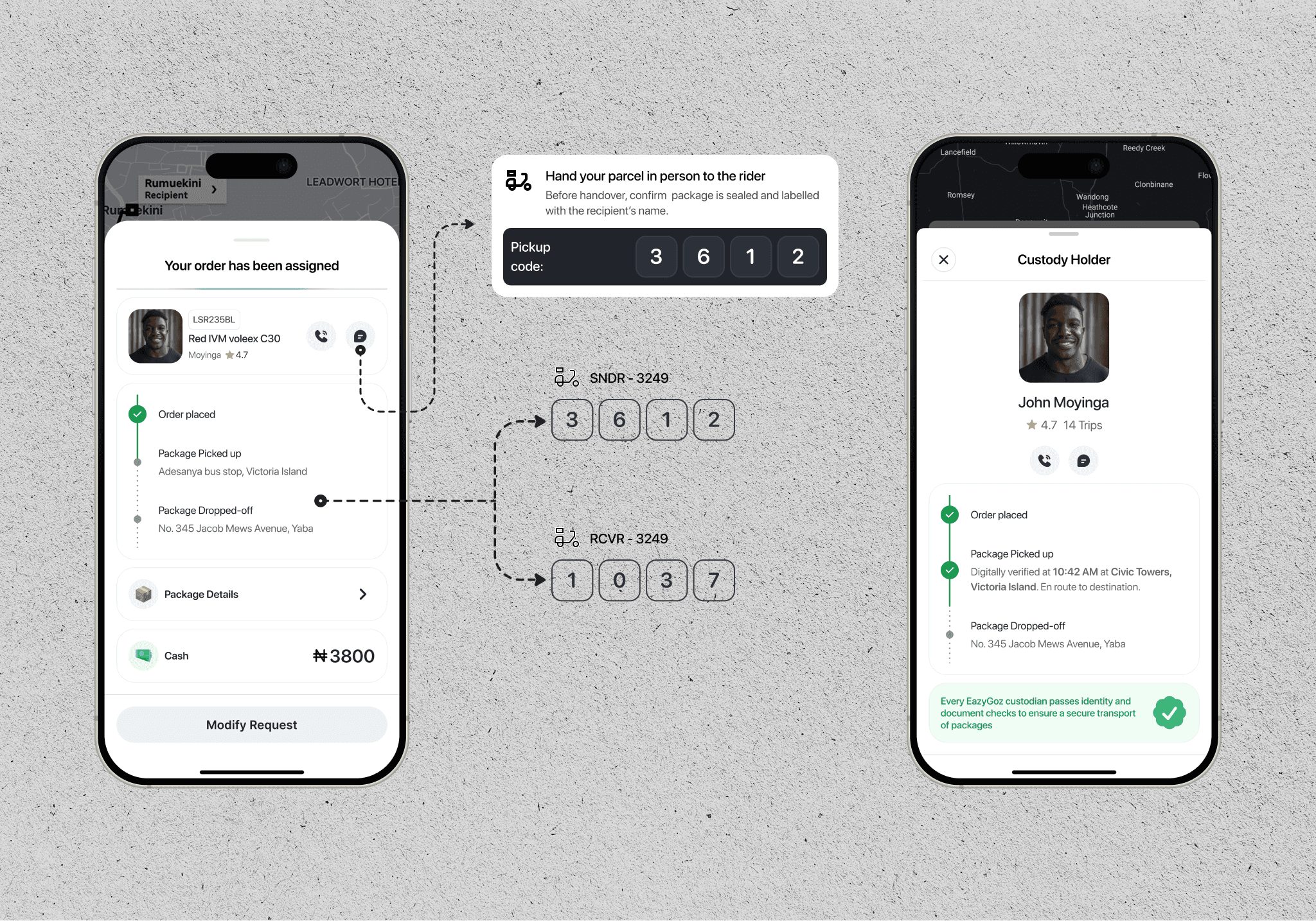
I designed pickup verification as a hard constraint: the driver cannot start the trip until they enter the sender's OTP. This simple interface rule creates proof that custody has officially transferred from sender to courier.
REDESIGNING FOR PHYSICAL VERIFICATION
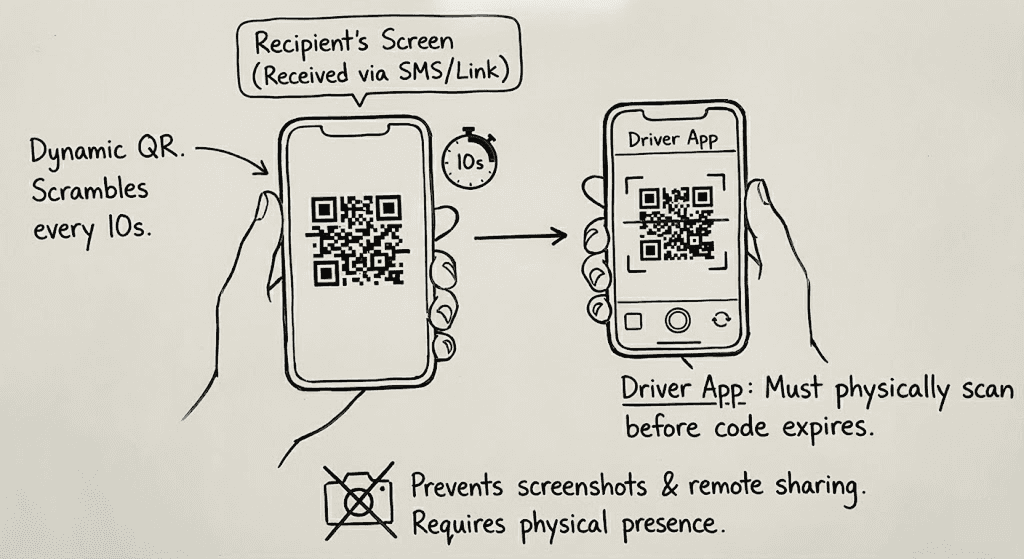
By requiring the driver to scan a dynamic QR code on the recipient's device, the interface forces a physical line-of-sight verification that a text-based PIN simply cannot provide.
The recipient receives a dynamic QR token that changes every 10 seconds, rendering screenshots and remote sharing useless.
ADAPTING TO LOW-COVERAGE AREAS
So I redesigned the tracking experience around discrete verification events rather than continuous location updates.
The timeline interface communicates custody status through verified milestones: "Package picked up and verified," "In transit," "Delivered and verified."
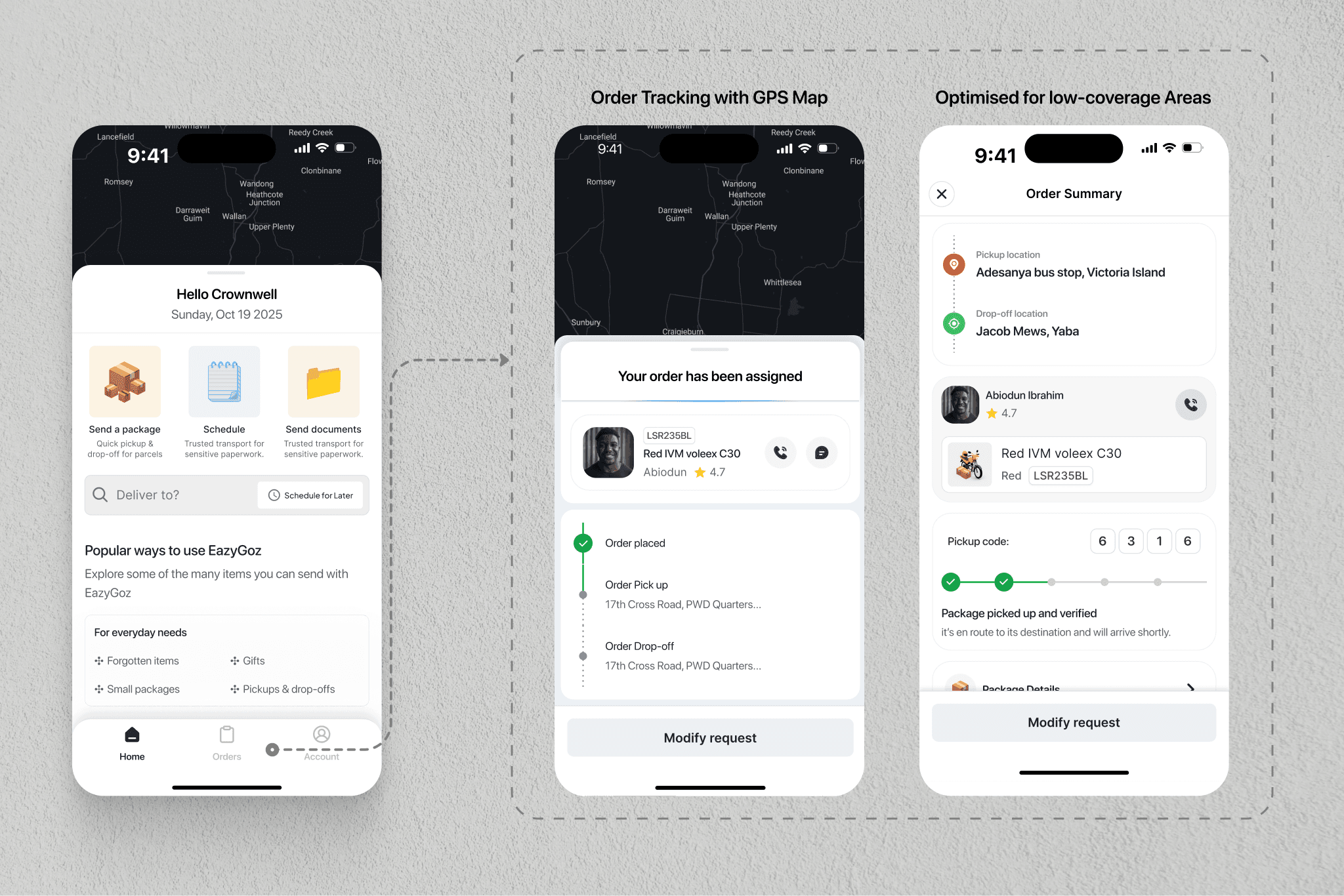
This made the service viable in low-coverage areas while maintaining transparency. Each stage was clearly communicated to the client, allowing them to track their order’s progress without needing real-time maps.
STAYING LEAN: DEFERRING MAP TRACKING
For the current beta phase, we made a deliberate decision to defer real-time map tracking integration on the user-facing side of the platform to keep operational costs low
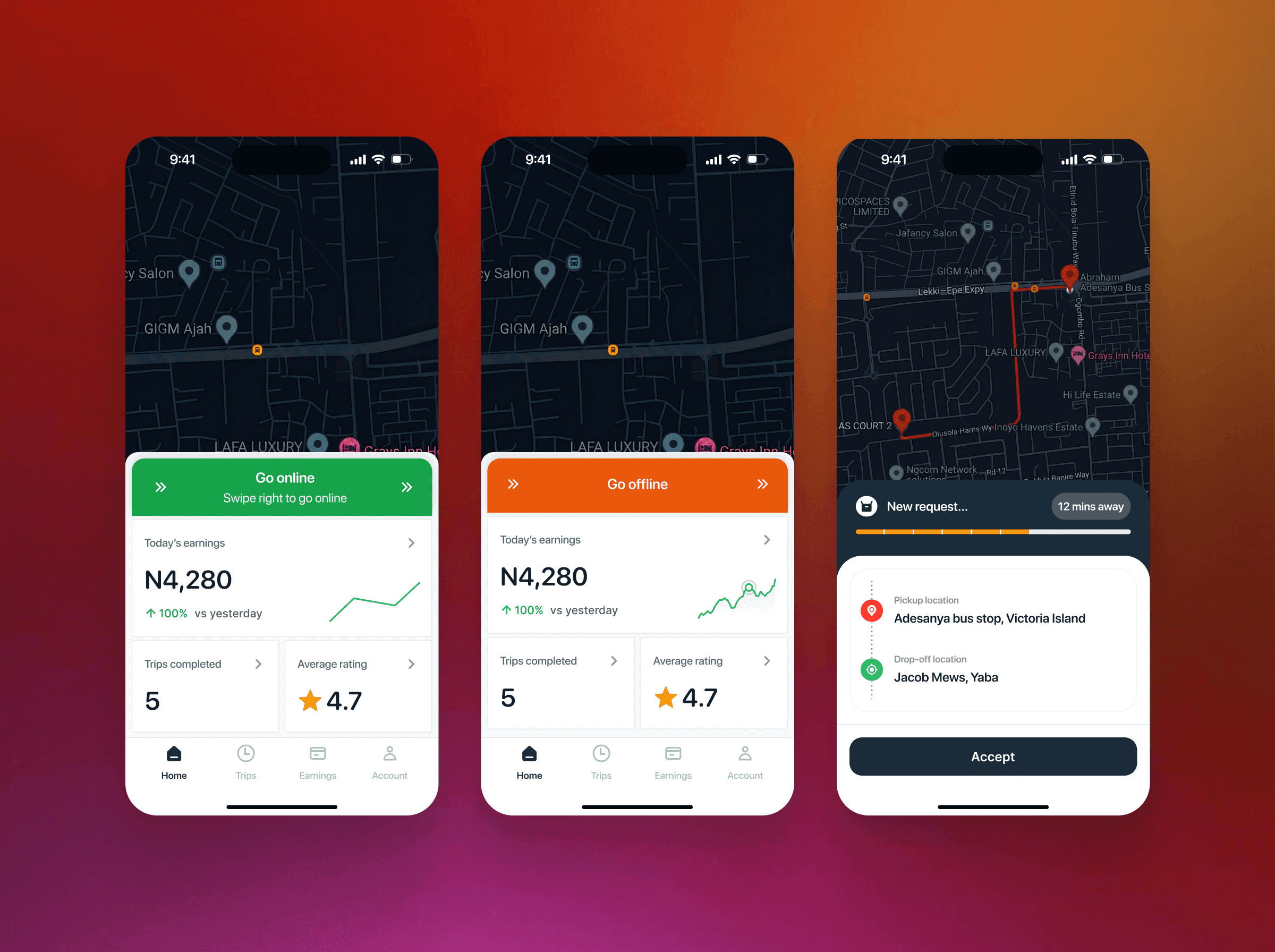
Drivers still have full map functionality in their application to navigate efficiently. Users access estimated arrival windows, direct contact with their assigned driver, and emergency support features.
WHAT WE"RE LEARNING IN BETA
The beta testing phase has surfaced valuable insights:
What's Working:
Event-based tracking meets transparency needs in the absence of constant connectivity.
Emerging Patterns:
A clear use case is emerging for multi-stop deliveries with professionals (consultants, mobile notaries) needing to drop items at 3-4 different locations in one trip.
Technical Challenges:
QR code generation requires reliable backend uptime
SMS delivery in Nigeria can be inconsistent (considering WhatsApp fallback)
Driver app performance on low-end Android devices needs optimization
Zuri CNPL:
HealthCare Financing for Africa's Workforce
Reimagining outpatient care for corporates and SMEs with trustworthy care-now, pay-later benefits.